
When your driveway or parking lot starts showing signs of wear, choosing asphalt overlay vs full replacement can feel overwhelming. Both options restore the look and function of your pavement, but the right choice depends on the condition of the existing surface, your budget, and your long-term goals. Understanding the differences can help you make a smart, cost-effective decision.
What Is an Asphalt Overlay?
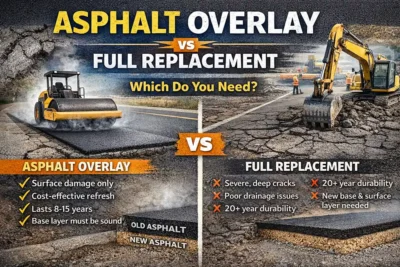 An asphalt overlay involves applying a new layer of asphalt over the existing surface. This method is often used when the foundation is still structurally sound but the top layer has minor to moderate damage. The process typically includes cleaning the surface, repairing small cracks or potholes, and then installing a fresh layer of asphalt.
Overlays are a popular choice because they are quicker and more affordable than a full replacement. They can instantly improve the appearance of your pavement and extend its lifespan by several years. For homeowners and property managers looking for a fast upgrade, overlays offer a practical solution.
What Is Full Asphalt Replacement?
Full replacement involves removing the existing asphalt and, in many cases, addressing the base layer underneath before installing new pavement. This is a more extensive process that is necessary when the pavement has significant structural issues, such as deep cracks, widespread potholes, or drainage problems.
Although full replacement is more expensive and time-consuming, it provides a completely fresh start. By rebuilding the surface from the ground up, you ensure a stronger, longer-lasting result that can handle heavy use and changing weather conditions.
Signs You May Need an Overlay
An asphalt overlay is ideal when the damage is mostly surface-level. If your pavement has minor cracks, fading, or slight unevenness, an overlay can effectively restore its appearance and function.
Other signs that an overlay may be sufficient include:
- The base layer is stable and intact
- Cracks are not widespread or deeply rooted
- There are no major drainage issues
- The surface has only light to moderate wear
In these cases, adding a new layer of asphalt can extend the life of your pavement without the higher cost of full replacement.
Signs You Need Full Replacement
Sometimes, an overlay simply won’t solve the problem. If the underlying structure is compromised, covering it up will only lead to recurring issues. Full replacement is the better option when there are serious signs of damage.
Look for these indicators:
- Large or alligator cracks across the surface
- Frequent potholes or crumbling asphalt
- Water pooling or poor drainage
- A failing or unstable base layer
If you notice these problems, investing in a full replacement will save you money in the long run by preventing repeated repairs.
Cost Considerations
Cost is often a deciding factor when choosing between an overlay and full replacement. Overlays are generally more budget-friendly because they require less labor, materials, and time. This makes them appealing for those looking to improve their pavement without a major investment.
Full replacement, while more expensive upfront, offers greater durability and longevity. If your pavement is severely damaged, the higher initial cost can be justified by reduced maintenance and fewer repairs over time.
Longevity and Performance
An overlay can extend the life of your asphalt by 8 to 15 years, depending on usage and maintenance. However, it relies on the condition of the existing pavement, so any underlying issues may eventually resurface.
Full replacement typically lasts 20 years or more with proper care. Because it addresses both the surface and the foundation, it provides a more durable and reliable solution for long-term performance.
Which Option Is Right for You?
Choosing between an asphalt overlay and full replacement comes down to the current condition of your pavement and your future plans. If your surface is in relatively good shape and you want a cost-effective refresh, an overlay may be the perfect fit. On the other hand, if you’re dealing with extensive damage or want a long-term solution, full replacement is the smarter investment.
Final Thoughts
Maintaining your asphalt is essential for safety, curb appeal, and property value. Whether asphalt overlay vs full replacement, working with experienced professionals ensures the job is done correctly. By evaluating your pavement’s condition and understanding your options, you can make a confident decision that keeps your driveway or parking lot looking and performing its best for years to come.